
Ring education
Engagement Diamond Rings vs Wedding Diamond Rings: What’s the Difference?
Engagement and wedding diamond rings may be worn together, but they mark different moments and solve different everyday needs. This guide makes the distinction clear, then helps you choose a set—or a single ring—that feels right for you.
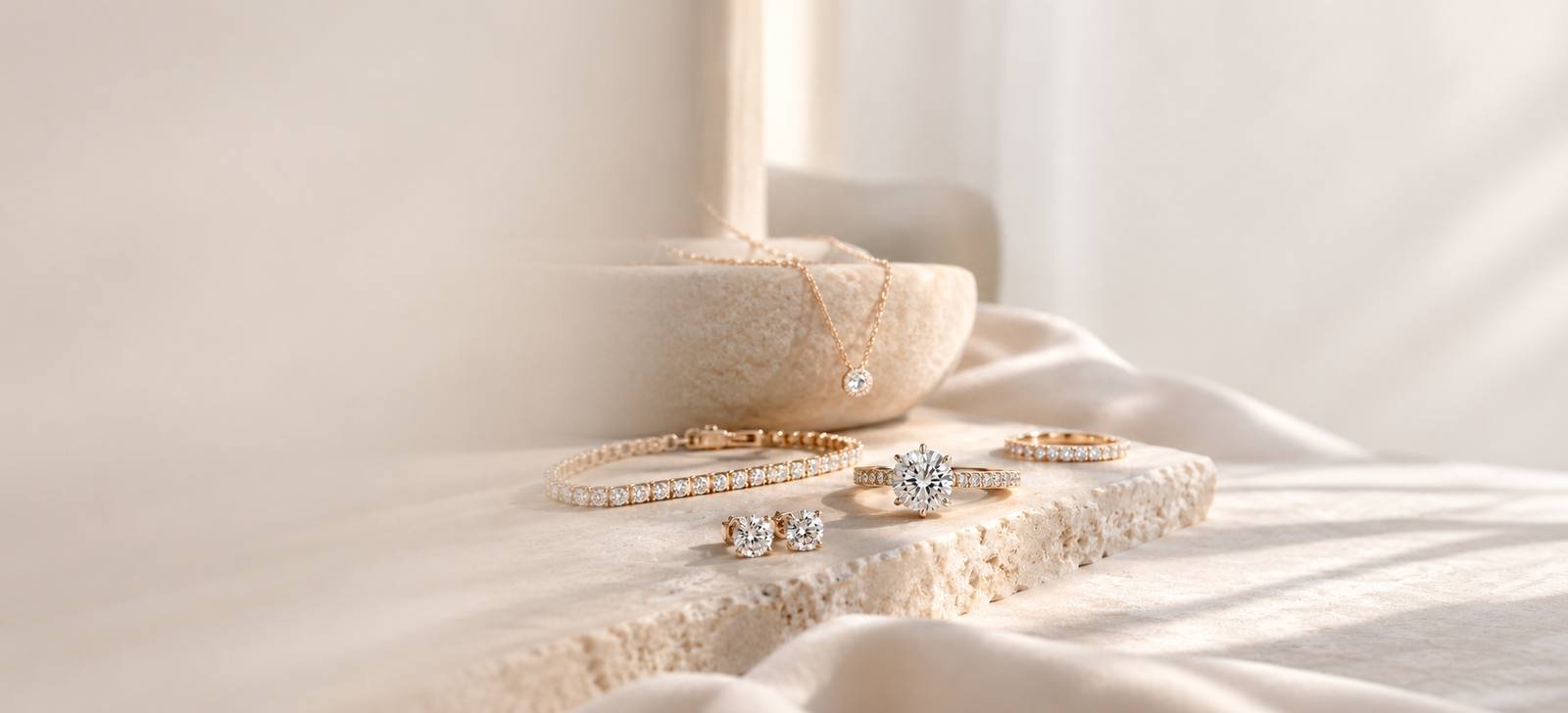
At a glance
Quick Reference
| Question | Engagement Diamond Ring | Wedding Diamond Ring |
|---|---|---|
| When is it given? | At a proposal or when a couple decides to become engaged | At the wedding ceremony or as a symbol of marriage |
| What does it usually symbolize? | An intention and promise to marry | The marriage commitment itself |
| What does it often look like? | A center diamond or gemstone in a more detailed setting | A plain, diamond-set, or eternity-style band |
| Is it required? | No | No; couples may choose one ring, two rings, or another meaningful option |
| Is it usually worn every day? | Often, but depending on comfort and lifestyle | Often, because it is commonly designed for daily wear |
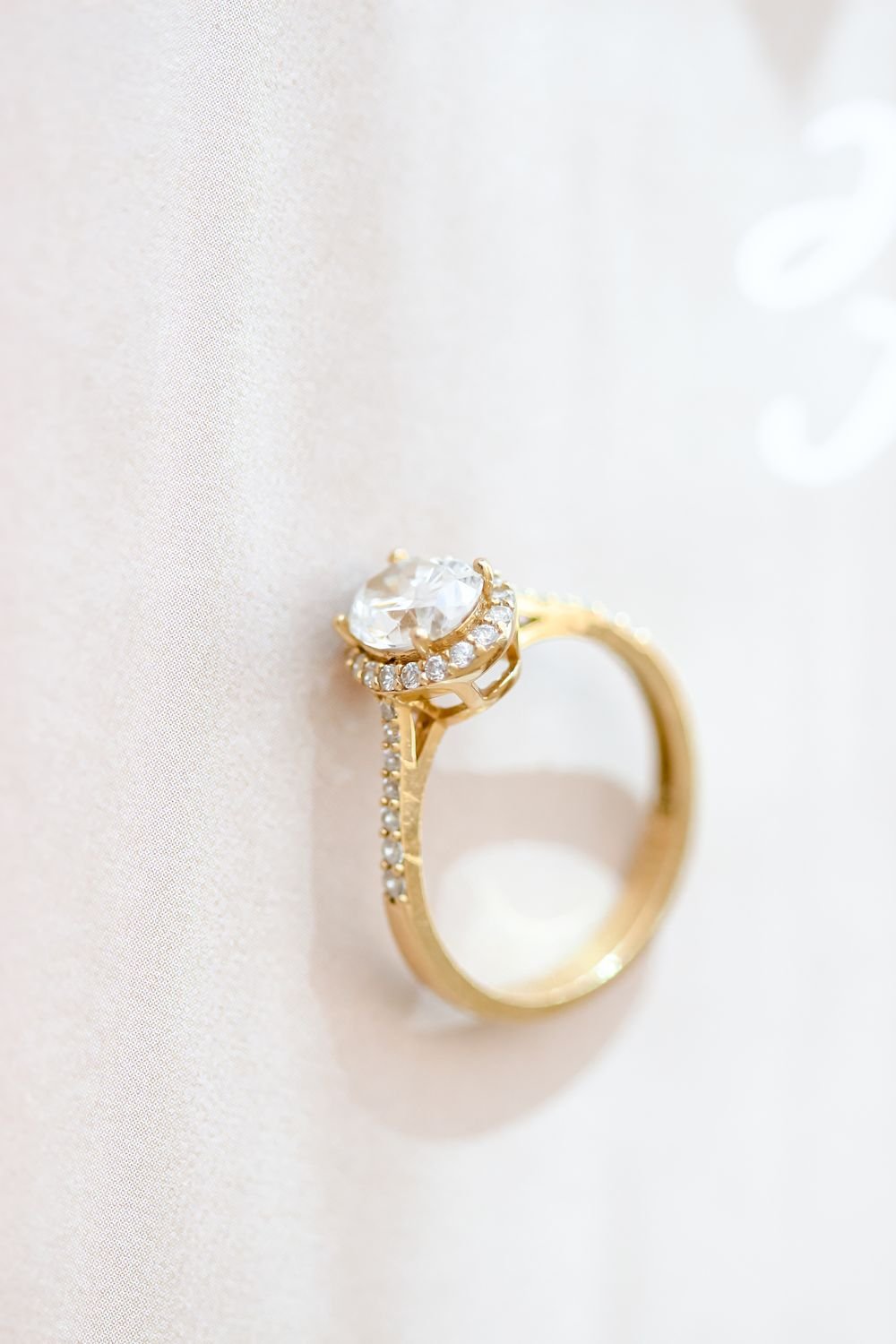
Overview
Overview: The Difference in One Minute
The key difference is purpose and timing, not a strict appearance rule. An engagement ring commonly marks a decision to marry, while a wedding ring or wedding band commonly marks the marriage ceremony.
Engagement rings often place a focal diamond at the center, while wedding rings are often lower-profile bands. Yet a wedding band can carry diamonds too, including pavé, channel-set, or eternity diamonds.
Both can be diamond rings, but they serve different symbolic and practical roles. A couple may buy a matching bridal set, choose rings separately, wear one ring, stack multiple bands, or choose a nontraditional alternative.
Neither label determines the stone, metal, or exact silhouette. A diamond engagement ring can be spare and low-set, while a diamond wedding band can be the more detailed piece in the pair.
It also helps to separate symbolism from shopping sequence. Couples may discuss both rings at once, choose them years apart, or change the arrangement as their work, taste, and circumstances evolve.
Engagement Ring at a Glance
- Often chosen for an engagement or proposal
- May feature a focal diamond or gemstone
- Can be intricate, sculptural, or minimalist
Wedding Ring at a Glance
- Often exchanged during a wedding ceremony
- May be plain metal, diamond-set, or eternity style
- Commonly selected with daily comfort in mind
Once the roles are clear, the most useful next step is to compare how the rings differ in design, wearability, and buying priorities.
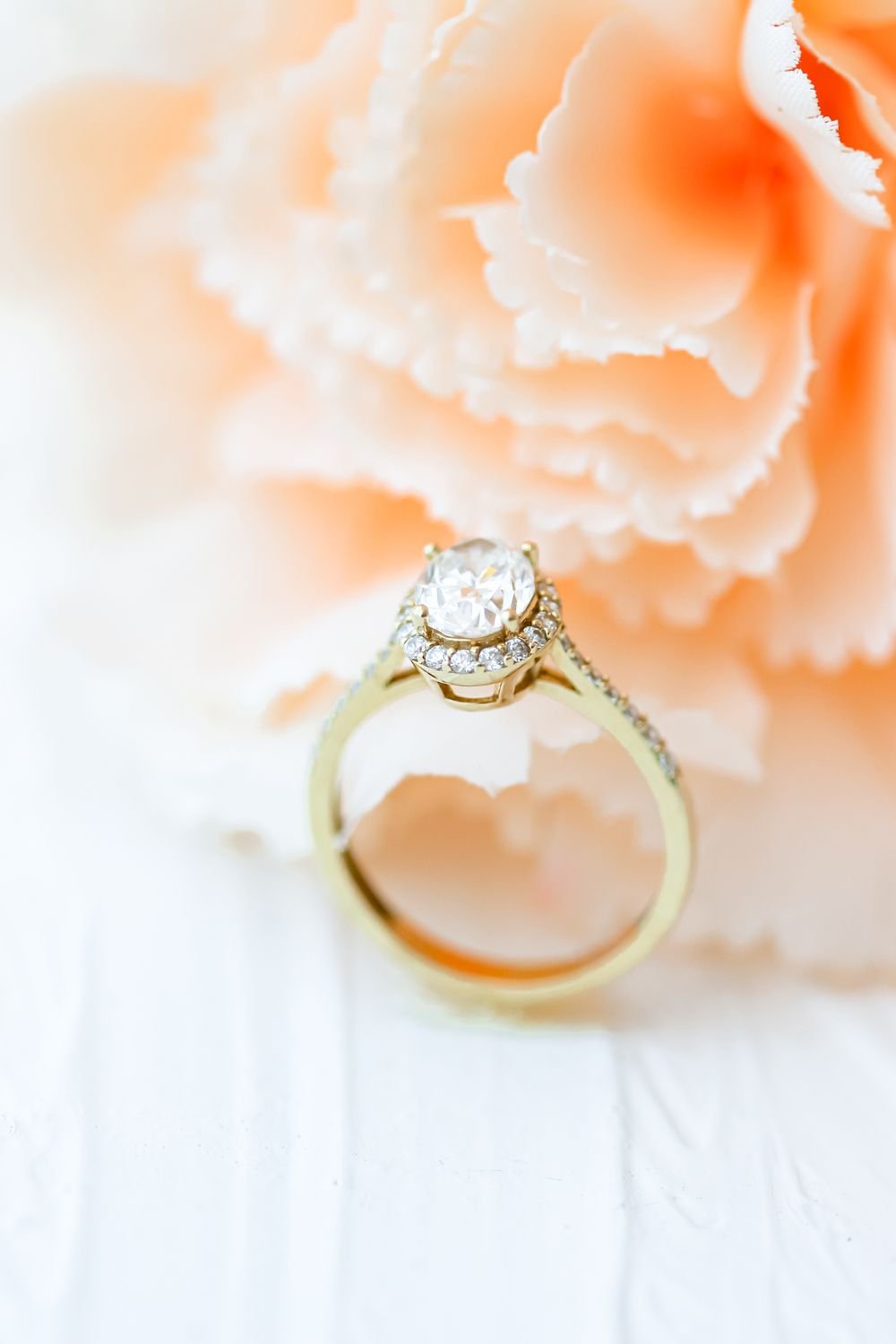
The complete guide
Engagement Diamond Rings vs Wedding Diamond Rings: The Complete Guide
Think of the names as descriptions of a ring’s role rather than a set of design commands. The details below can help you make a considered choice without treating any custom as compulsory.
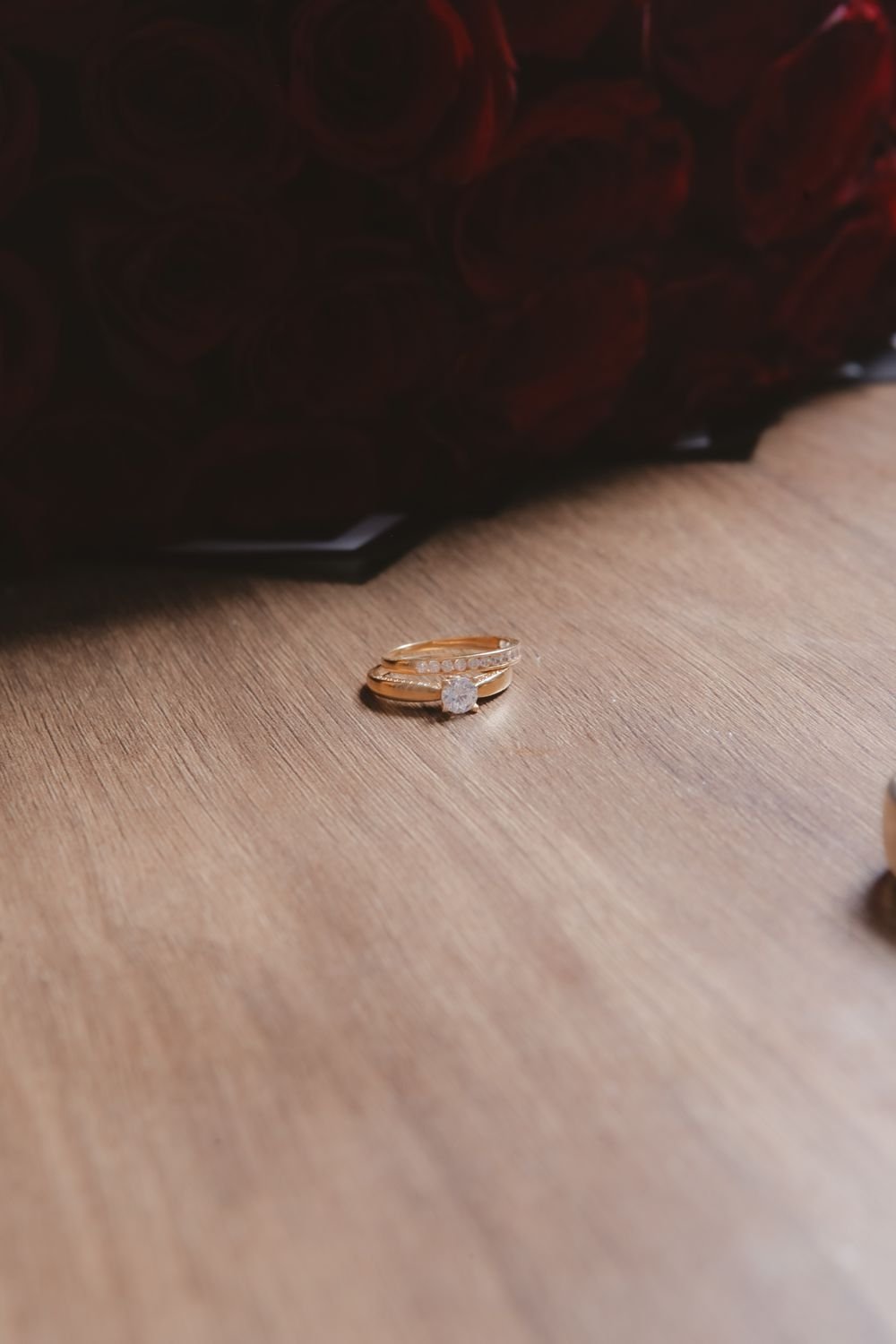
1. Purpose and Timing: Promise vs Marriage
An engagement ring is commonly associated with the proposal or engagement period. It can be presented during a planned proposal, selected together in advance, or chosen after a couple has already agreed to marry.
A wedding ring, often called a wedding band, is commonly exchanged at the wedding ceremony as a symbol of marriage. In many Western customs, it is then worn every day, although the timing and practice vary between people and places.
Choosing a ring together does not dilute its meaning. A ring purchased before a proposal can still be an engagement ring, and a band chosen months after a ceremony can still represent the marriage.
The distinction is useful because it clarifies what each piece needs to do. One ring may carry a visual focal point and the other may prioritise an easy, durable rhythm for everyday life.
Some couples exchange rings at an engagement, a wedding, both milestones, or neither. What matters is that the moment and object make sense to the people involved, rather than meeting an outside expectation.
It is also common for the wearer to be involved in every decision, from diamond choice to final fit. The tradition can be adapted without losing the affection or commitment a ring is intended to express.
A simple timeline
- Choosing or receiving an engagement ring
- The engagement period
- Choosing a wedding band or wedding rings
- Exchanging rings at the ceremony, if the couple chooses
- Wearing one ring, both rings, or an alternative arrangement afterward
What this does not mean
- An engagement ring does not have to contain a diamond.
- A wedding band does not have to be plain.
- Neither ring must follow a gendered tradition.
- A couple does not need to own two rings.
A meaningful choice can be conventional, adapted, or entirely personal. The labels simply make conversations with a jeweler, partner, or family easier to navigate.
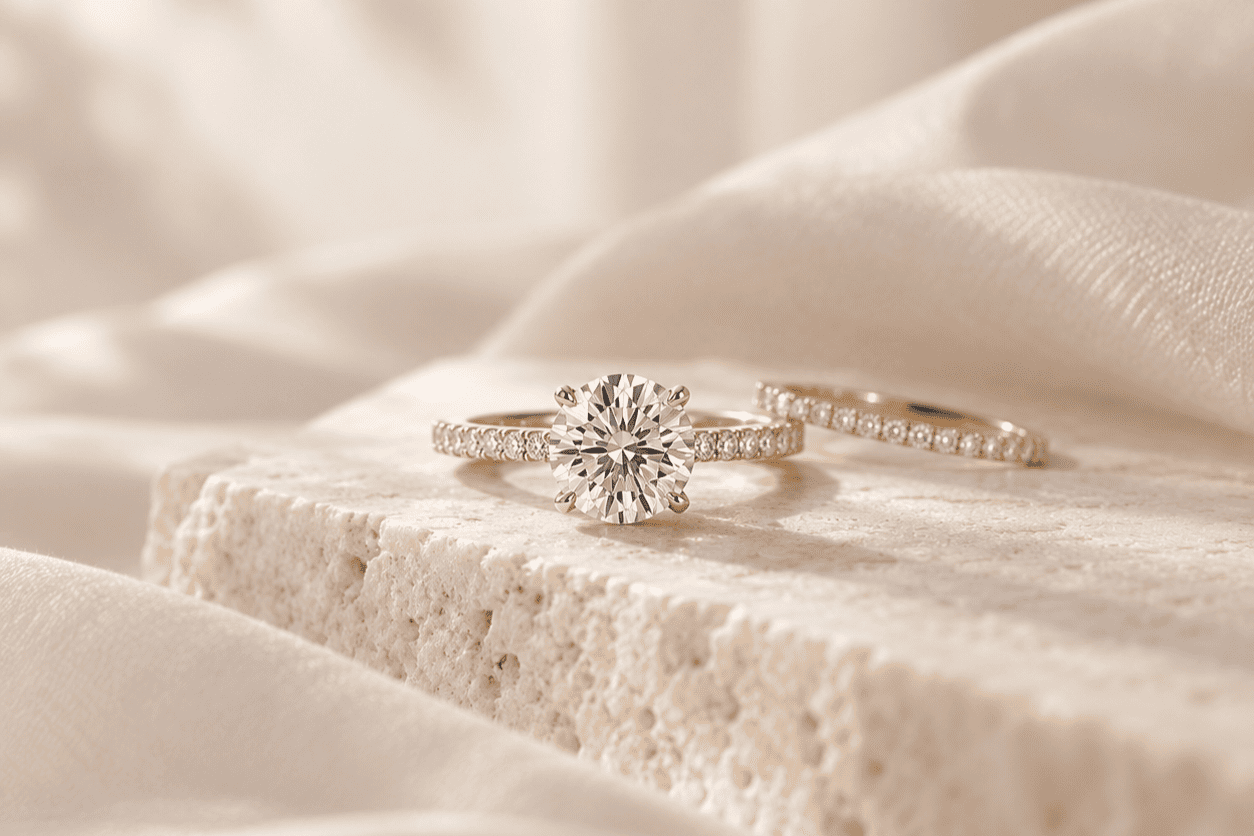
2. Design Differences: Center Stone, Profile, and Detail
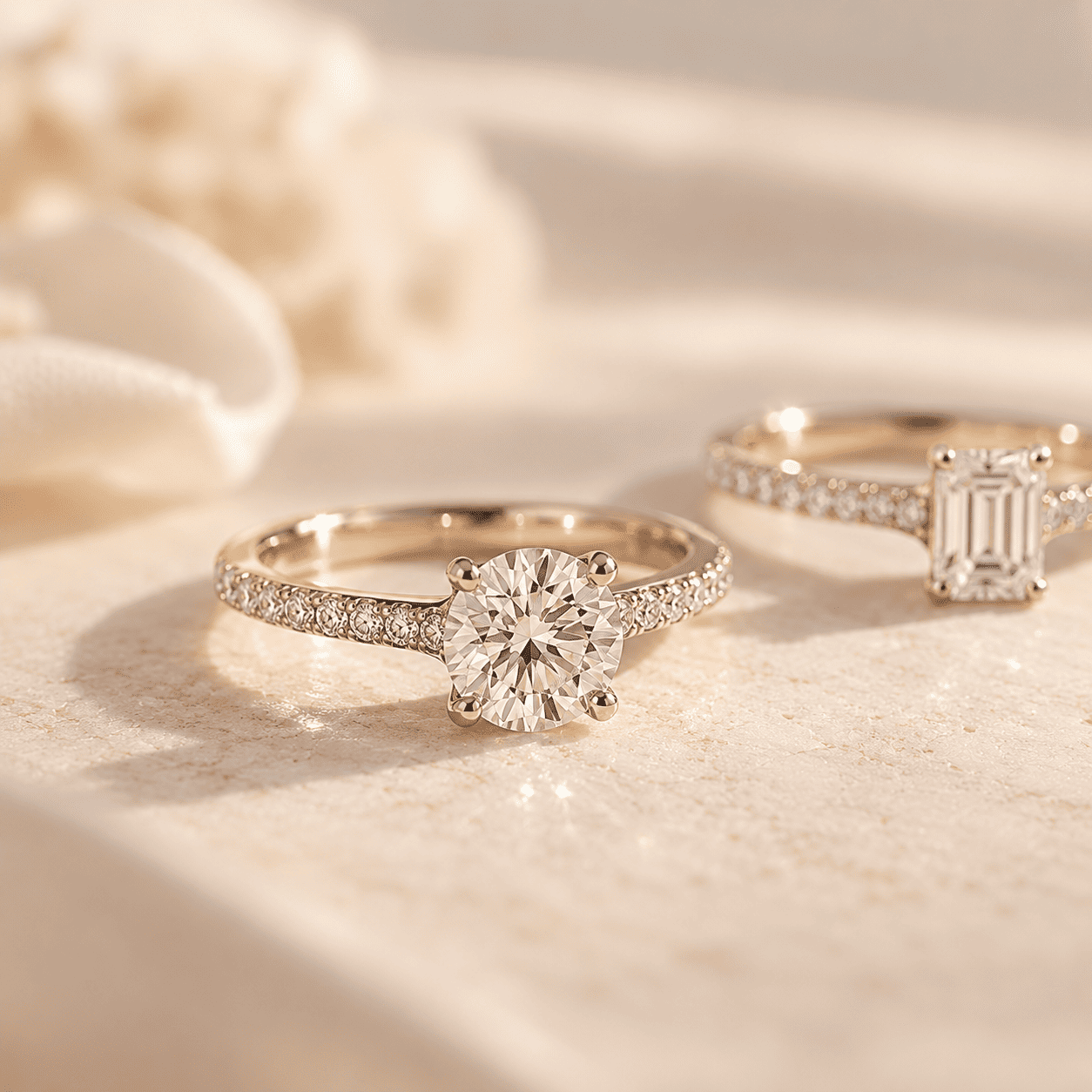
Design is where the distinction often becomes visible, though it is never a rulebook. Engagement rings frequently use a central diamond in a solitaire, halo, three-stone, bezel, cathedral, or hidden-halo setting.
That focal stone creates height and visual emphasis. The surrounding band may be narrow and quiet, accented with pavé diamonds, or designed as part of a more elaborate profile.
Wedding rings often read as a continuous band rather than a single centrepiece. They may be polished metal, pavé, channel-set, bead-set, shared-prong, or eternity bands, and each approach can feel understated or striking.
Band width matters as much as ornament. A slim band can give a light, delicate impression; a wider band can feel graphic, substantial, or better suited to someone who enjoys a stronger presence on the hand.
Profile describes how high a ring sits above the finger. High-set center stones can affect how flush a straight wedding band sits beside the engagement ring, while low-profile, bezel-set, or cathedral styles may behave differently when stacked.
Comfort is a design feature, not an afterthought. Consider how the inside of a band feels, whether prongs catch on knitwear, and how both rings sit when you close your hand or hold everyday objects.
| Feature | Engagement Diamond Ring | Wedding Diamond Ring |
|---|---|---|
| Center feature | Often a focal diamond or gemstone | Often an even band design, with or without diamonds |
| Typical profile | Can be raised to showcase a center stone | Often lower and smoother for regular wear |
| Diamond placement | Center stone, side stones, or accents | Pavé, channels, shared prongs, or around the band |
| Setting types | Solitaire, halo, three-stone, bezel, cathedral, hidden halo | Polished, pavé, channel-set, bead-set, shared-prong, eternity |
| Band width | Varies around the focal design | Ranges from slim and refined to broad and bold |
| Daily comfort considerations | Height, prongs, and centre-stone exposure matter | Edge profile, stone exposure, and fit matter |
| Visual impact | Often directs attention to one focal point | Can frame the engagement ring or stand alone |
| Pairing considerations | Setting shape may leave room for a band | Straight, contoured, open, or notched styles can help |
Design vocabulary to know
- Solitaire: a ring with one principal stone.
- Pavé: small diamonds set closely together for a continuous sparkle effect.
- Eternity band: a band with diamonds or gems continuing around all or most of its circumference.
- Contour band: a curved wedding band shaped to sit near another ring.
- Flush fit: a close meeting of two rings with little or no visible gap.
- Setting profile: the height and shape of a ring above the finger.
- Bridal set: an engagement ring and wedding band designed or sold to work together.
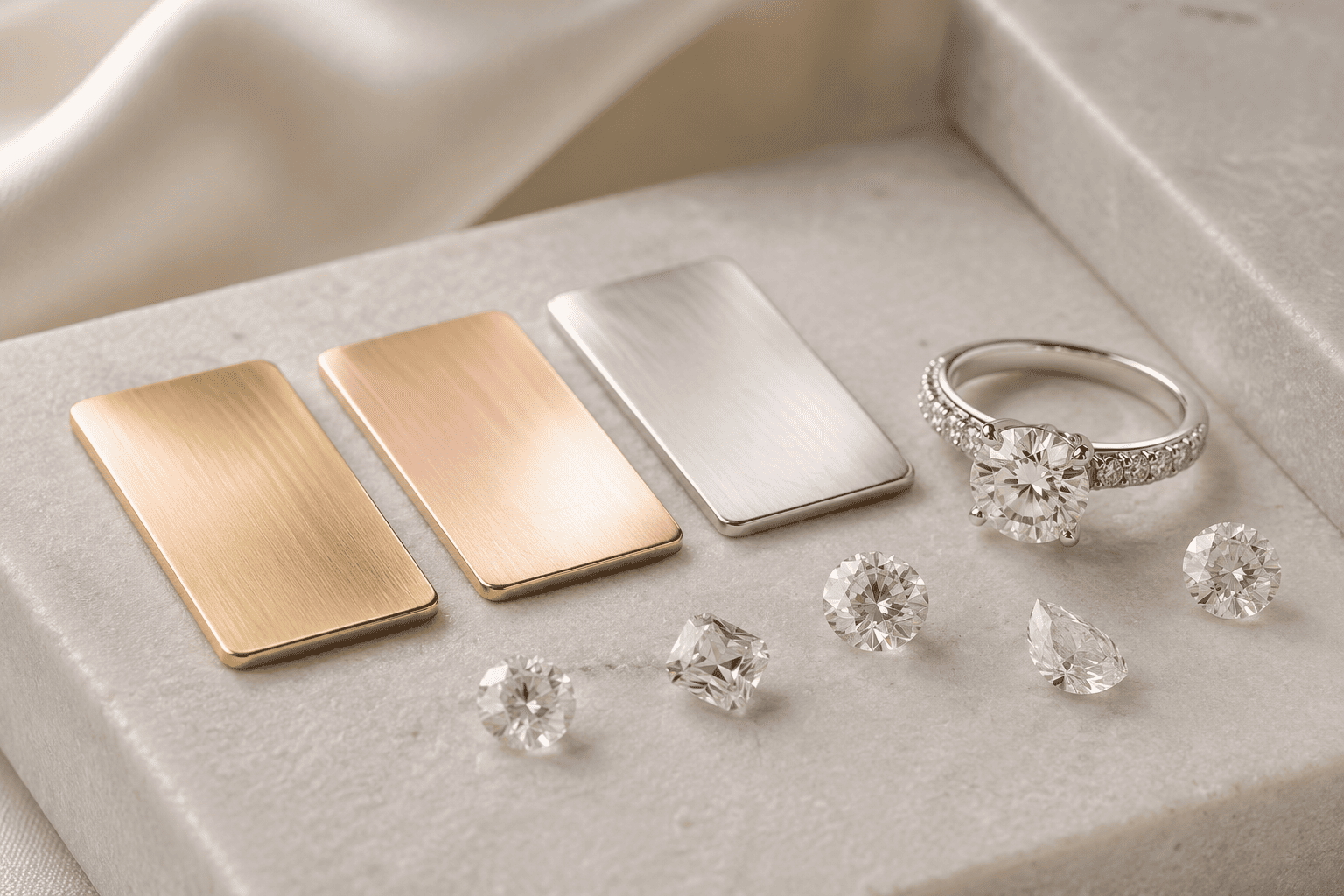
3. Diamonds in Each Ring: Similar Material, Different Role
“Diamond ring” describes a material and style choice. “Engagement ring” and “wedding ring” describe the role a piece plays and, commonly, the moment it marks.
An engagement ring may place most of its diamond presence in one centre stone. A wedding ring may distribute its diamonds as a fine line of pavé, a channel of stones, or an eternity-style circle around the finger.
Side stones and accent diamonds can appear in either ring. Matched diamond shapes can make a pair feel connected, but a balanced stack can also combine different cuts, textures, and degrees of sparkle.
Total carat weight is one way to describe a diamond design, not a verdict on its beauty. Placement, cut appearance, setting security, finger coverage, and the way light moves through a ring all shape what you notice first.
Lab-grown and natural diamonds are different options with different provenance, availability, and budget considerations. Neither needs to be treated as inherently better; the useful question is which option supports your priorities.
| Diamond Feature | Engagement Ring Use | Wedding Ring Use |
|---|---|---|
| Center diamond | Often the visual focus | Less common, though possible in a statement design |
| Side stones | Can frame or extend the center stone | Can add pattern across the band |
| Accent diamonds | May add detail to shoulders or gallery | Often create a light-catching line |
| Matched diamond shapes | Can echo the band’s diamond shape | Can coordinate with or contrast the engagement ring |
| Total carat weight | May be concentrated in one focal design | May be spread across the circumference |
| Lab-grown or natural diamonds | Either option may suit the intended design | Either option may suit the intended design |
| Security and setting style | Prongs, bezels, and galleries affect exposure | Shared prongs, channels, and bezels affect wear |
Before you compare diamonds
- Decide which ring should carry the visual focus.
- Consider whether you want a center stone.
- Consider how frequent wear affects setting choice.
- Compare diamond appearance in real-world lighting.
- Ask how future resizing or repair may affect the design.
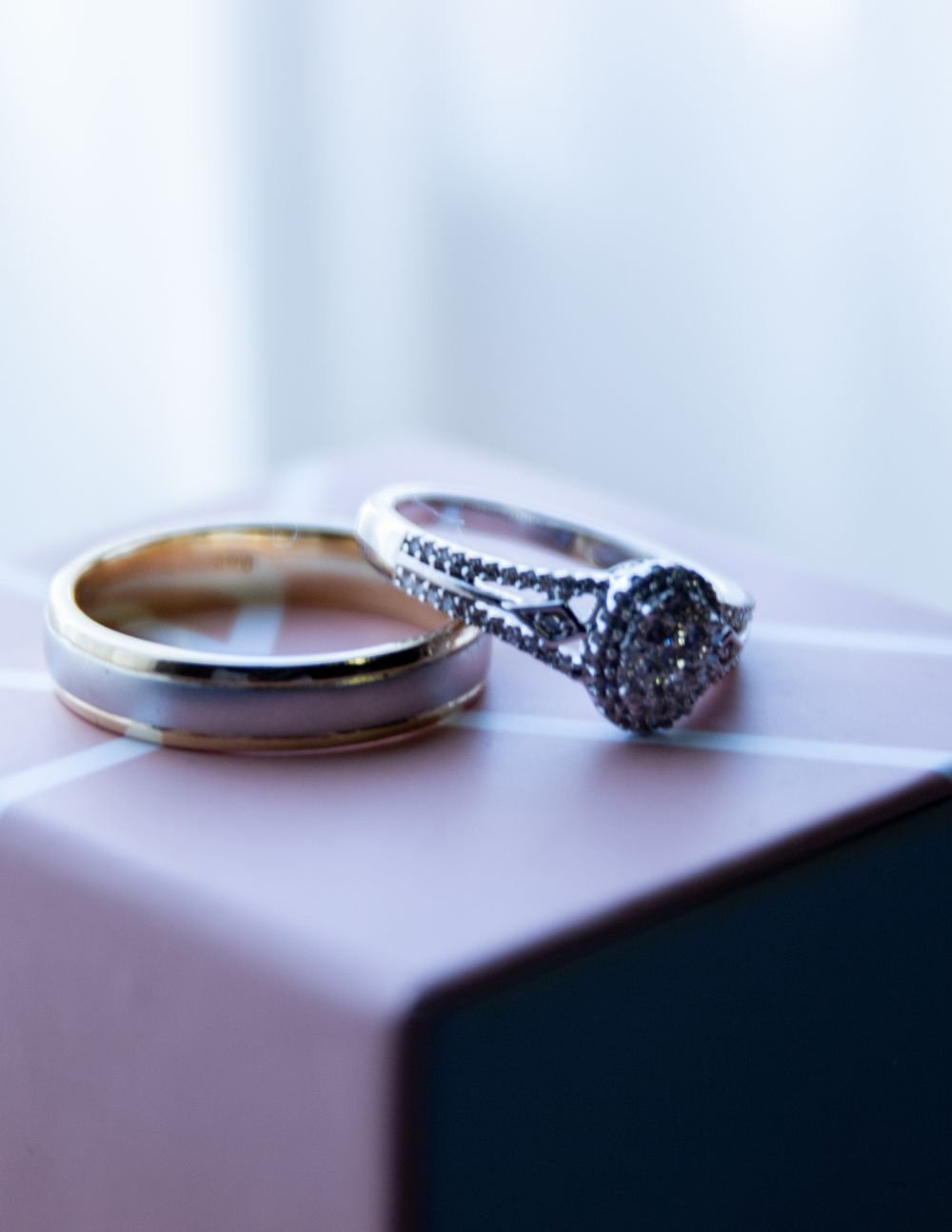
4. How Engagement Rings and Wedding Bands Fit Together
Two rings can sit perfectly together, but “perfectly” can mean different things. Some people want a flush fit with little or no space, while others like the breathing room of a deliberate gap.
A straight wedding band can sit close to a ring with a high enough gallery or a suitably narrow centre setting. When the engagement ring’s centre stone or basket reaches toward the band, the two pieces may meet before their shanks do.
That is where a contour band becomes useful. Its curve is shaped to nest around the center setting, while a notched band makes a more specific space for it.
Open bands leave a visible space at the top and can feel contemporary or airy. They are also practical when a design needs room around a raised setting without hiding the engagement ring’s profile.
A gap is not automatically a flaw. It may be a deliberate styling choice, a practical result of the engagement-ring setting, or simply the look you prefer when the rings are seen from the top and side.
Try a stack in motion, not only under display lighting. Pay attention to whether the rings spin, pinch, knock together, or catch, because a close visual relationship should still feel easy to live with.
Ask to see rings at the same finger size you expect to wear. Small changes in width, thickness, or where a curve begins can change the amount of space you see and feel.
If you already own an engagement ring, bring it to the appointment whenever possible. Trying a candidate band beside the actual setting reveals more than a drawing, memory, or standard sample can show.
| Your Priority | Consider | Why It Helps |
|---|---|---|
| Minimal gap between rings | Flush-fit or contoured band | Can sit close to the engagement ring |
| Preserve a high center setting | Curved, open, or notched band | Creates space around the setting |
| Wear bands separately | Standalone wedding band | Looks complete on its own |
| Add more sparkle | Pavé or eternity band | Adds diamond presence around the stack |
| Reduce rubbing | Ask about spacing and metal hardness | Helps protect surfaces and settings |
Fitting checklist
- Try the rings together from a top view and side view.
- Check whether they spin, pinch, or knock together.
- Test comfort while making a fist.
- Ask whether the rings can be resized in the future.
- Decide whether you like the look both stacked and worn separately.
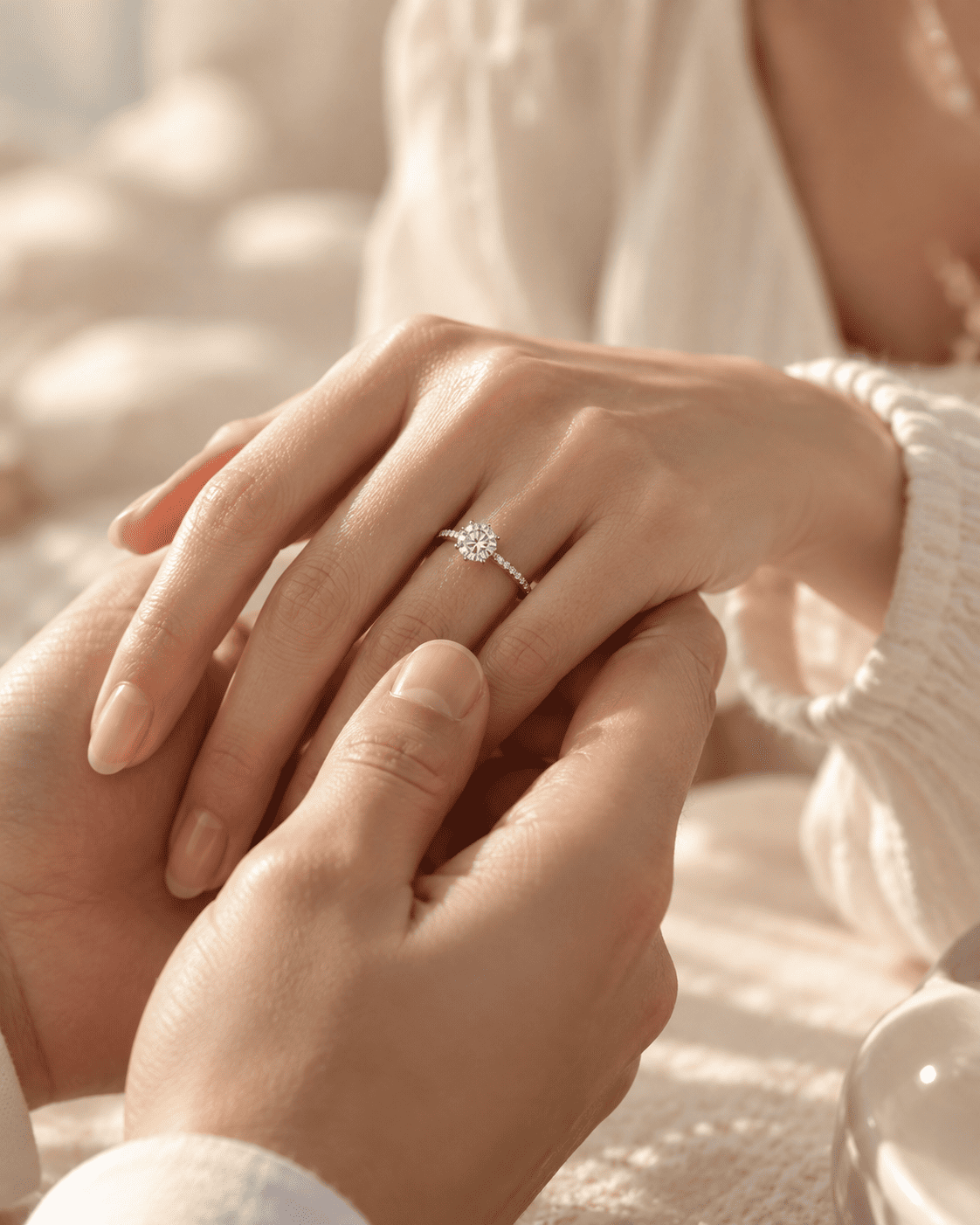
5. How to Wear Engagement and Wedding Rings
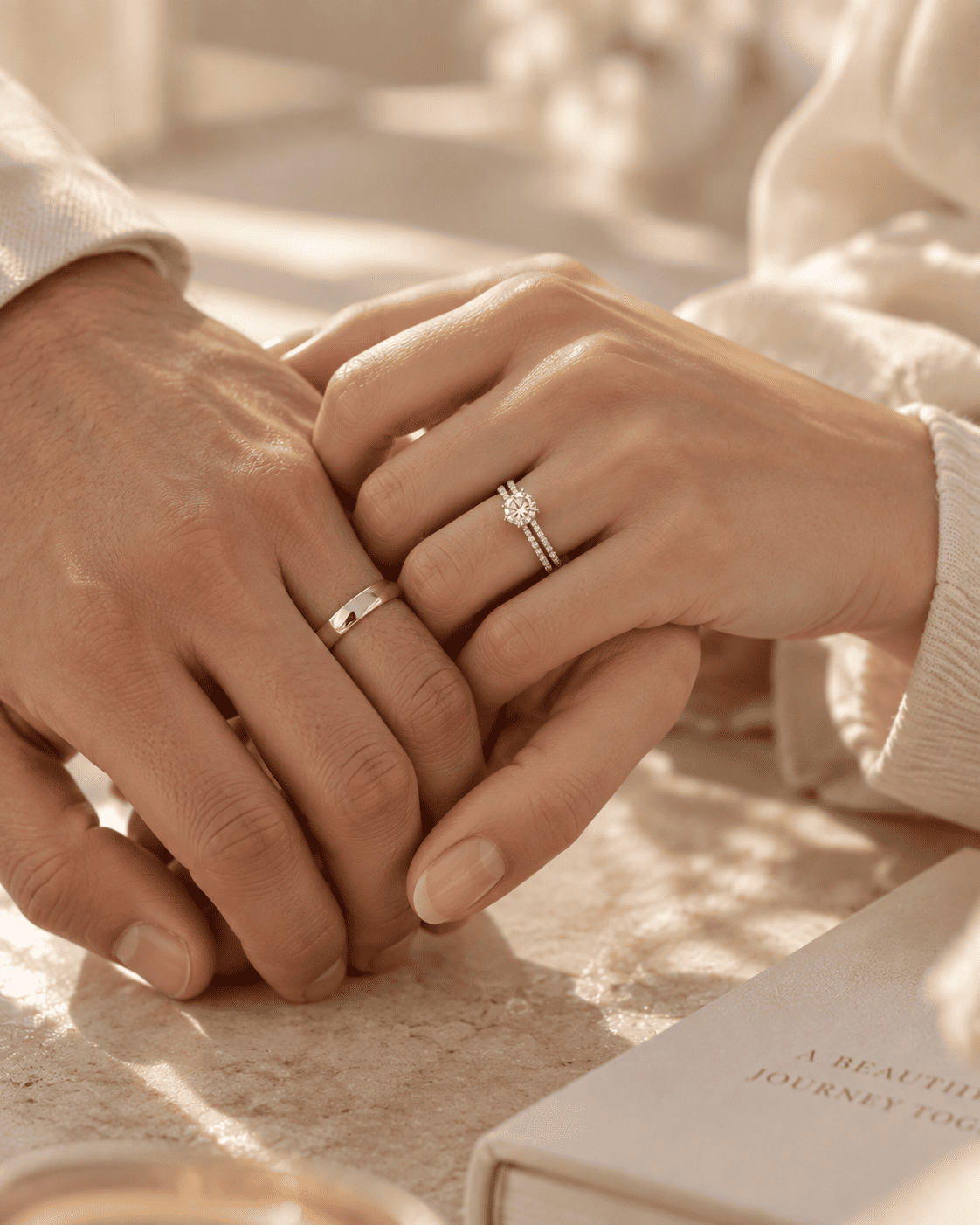
In many Western customs, the wedding band is worn closer to the hand and the engagement ring sits above it on the ring finger. The order is often described as keeping the wedding band nearer the heart, but it is a convention, not a requirement.
Customs vary by country, culture, religion, relationship preference, comfort, and work needs. Some people switch hands, reverse the order, wear the rings separately, or choose to wear only one on most days.
The practical question is whether your chosen arrangement works for your body and routine. A ring stack can feel beautiful at dinner yet feel too tall for gloves, travel, exercise, care work, or hands-on hobbies.
There is also no deadline for choosing a routine. Many people experiment after the wedding, adding a band later or reserving a more delicate piece for days when it suits the activity.
There is no need to justify switching your rings for practical reasons. Removing a ring before a physical task, storing it safely, and putting it back on later can be part of responsible ownership.
Fit may change with weather, time of day, and everyday movement. A routine that feels comfortable and secure most of the time is usually more valuable than one that follows a tradition perfectly.
If you enjoy a stack but find it distracting, try each piece separately for a week. That simple test can clarify whether you need a lower profile, a different order, or only one ring for daily wear.
Common ways couples wear their rings
- Wedding band and engagement ring stacked on one finger
- Wedding band only for daily activities
- Engagement ring only
- One ring on each hand
- Rings worn on a chain during active work
- A nontraditional ring arrangement
6. Choosing a Pair: Matching, Coordinating, or Mixing
A matching pair usually repeats metal, proportions, and small design details. An exact bridal set may be designed to nest closely, so its visual relationship is settled before the rings leave the workshop.
Coordinated rings share a few cues without being identical. They might repeat a metal colour, use comparable band widths, or balance a larger centre stone with a finer diamond wedding band.
Mixed styles are intentional too. Yellow gold and white gold can create contrast, while a matte band beside a polished engagement ring can give each piece its own identity.
Look at visual balance rather than sameness alone. A broad wedding band beside a narrow engagement shank, for example, may feel confident and sculptural—or it may overwhelm the focal stone depending on the proportions.
Engraving and finish create subtler connections. A private message, a shared edge detail, or matching diamond shapes can make separately chosen rings feel like companions without forcing them to look identical.
Photography can be useful for collecting preferences, but it is not a substitute for trying proportions in person. Two bands with the same stated width can feel different because of profile, edges, and how they meet another ring.
Give the pair a moment of quiet inspection before deciding. If you keep noticing one ring rather than the conversation between them, a small change in texture, height, or width may restore balance.
| Approach | Best for | Questions to Ask |
|---|---|---|
| Exact bridal set | A close, preplanned stack | Do you want a coordinated fit from day one? |
| Coordinated pair | Related rings with individual character | Which details should repeat: metal, width, stones, or finish? |
| Mixed-metal stack | Visible contrast and flexibility | Do the tones feel intentional together? |
| Statement engagement ring plus simple band | Keeping focus on the center ring | Will a plain band balance the setting? |
| Simple engagement ring plus diamond wedding band | Adding sparkle across the stack | Will the diamond band be comfortable for daily wear? |
| Independent rings chosen at different times | Flexibility and evolving taste | Will each ring look complete on its own? |
Bring this to your ring appointment
- Engagement ring or accurate measurements/photos
- Preferred metal color
- Approximate total budget
- Lifestyle considerations
- Whether you want to wear both rings daily
- A list of styles you like and dislike
7. Budget, Lifestyle, and Long-Term Care
A combined budget can be more helpful than treating the two rings as unrelated purchases. It lets you decide where visible detail matters most and where a simpler choice would serve you better over time.
Some people devote more detail to a centre diamond or focal design, then choose a streamlined band. Others prefer a quieter engagement ring and put more diamond presence into the wedding band they expect to wear most often.
Plan for the future as well as the ceremony. Resizing potential, insurance or appraisal considerations where relevant, periodic cleaning, and setting checks can all influence which designs feel sensible for you.
Metal and setting choices deserve a practical conversation, especially when rings touch one another in a stack. Individual jewelers can explain care and warranty terms for a particular setting and recommend how to minimise wear.
Build in room for choices you may make later, without assuming that you must make them. An anniversary band, a replacement, or no further ring at all can all be sensible outcomes.
A thoughtful budget is simply one that supports your priorities without creating strain. Clarifying those priorities early makes it easier to compare alternatives without turning any single feature into a measure of commitment.
Budget-planning list
- Ring one: center diamond or focal design
- Ring two: plain, diamond-accented, or eternity-style band
- Metal selection
- Resizing potential
- Insurance or appraisal considerations where relevant
- Periodic cleaning and setting checks
- Future anniversary or stacking bands, if desired
Useful questions
- Which detail will matter to us five years from now?
- Which ring will face the most daily contact?
- What care does this setting need?
- Can this design evolve if our preferences change?
| Daily Factor | Helpful Ring Consideration |
|---|---|
| Frequent hands-on work | Lower profile or protective setting |
| Gloves or healthcare work | Smooth edges and easy removal |
| Gym or outdoor activities | Secure storage and a practical wear routine |
| Desire for low maintenance | Simple band or durable setting style |
| Love of sparkle | Diamond band with an appropriate setting for daily wear |
8. Do You Need Both an Engagement Ring and a Wedding Ring?
No. Two rings are a common option, not a requirement, and there is no universal standard for what a committed relationship should look like on someone’s hand.
A couple may choose an engagement ring and wedding band, a wedding band only, an engagement ring that becomes the wedding ring, matching rings, or another symbol entirely. The decision can be financial, practical, aesthetic, cultural, or simply intuitive.
One ring can be especially appealing when someone wants a simple routine or a prominent piece that already feels complete. Two rings can be appealing when someone enjoys the ceremony of exchange and the flexibility of a stack.
Choosing separately over time is equally valid. It allows a wedding band to answer a real need discovered after living with an engagement ring, rather than asking one purchase to predict every future preference.
There is also room for a ring to be gifted, inherited, redesigned, or chosen as a shared project. A personal history can make a nonstandard choice feel especially resonant.
Choose two rings if…
You enjoy a layered look, want separate markers for engagement and marriage, or would like a lower-profile band for some activities.
Choose one ring if…
You prefer simplicity, have found one design that feels complete, or want a single piece to manage and maintain.
Choose a wedding band only if…
You value an uncomplicated everyday symbol, prefer a band’s profile, or do not want a centre-stone ring.
Choose a nontraditional option if…
Another material, object, ritual, or arrangement better reflects your relationship, values, or daily life.
Meaning matters more than conformity. The strongest arrangement is the one both people understand, enjoy, and can comfortably live with.
FAQ
Frequently Asked Questions About Engagement and Wedding Diamond Rings
These answers explain common conventions while leaving room for personal and cultural preference.
1. Is an engagement ring the same as a wedding ring?
Usually, the terms describe different roles. An engagement ring commonly marks a proposal or engagement, while a wedding ring or wedding band commonly marks the marriage ceremony. Their designs can overlap, and one ring can serve both purposes if that suits the couple. The important distinction is the meaning assigned to the piece, not whether it matches a conventional silhouette.
2. Can a wedding ring have diamonds?
Yes. A wedding ring may be plain metal, partially diamond-set, or made as an eternity-style band with diamonds around all or much of the circumference. Pavé, channel-set, bead-set, and shared-prong designs are common ways to add diamonds. Choose a setting with attention to comfort, security, maintenance, and how it will sit alongside another ring if you plan to stack.
- Diamond placement can be quiet or highly visible.
- Practical wear needs can guide the setting choice.
3. Do engagement and wedding rings have to match?
No. They can match exactly, coordinate through small details, or deliberately contrast in metal colour, texture, width, or diamond treatment. A matching pair can feel cohesive, while a mixed stack can reflect an evolving personal style. Try the rings together from several angles and also assess each ring alone, especially if you expect to wear them separately at times.
4. Which ring goes on first?
In many Western customs, the wedding band is worn first, closer to the hand, with the engagement ring above it. This is a convention rather than a requirement, and customs vary across cultures and individuals. You can reverse the order, use different hands, or wear only one ring. Comfort, work routines, and personal meaning are all valid reasons to choose another arrangement.
- Ring order is personal, not a test of correctness.
- Consider both how the stack looks and how it feels.
5. Do I have to wear both rings after the wedding?
No. Some people wear both rings every day, while others wear a wedding band alone for work, travel, sports, or comfort. You might alternate based on the occasion, keep a ring on a chain, or decide that one piece is enough. A meaningful symbol should fit your real life; it does not need to follow a fixed public rule.
6. Can I use my engagement ring as my wedding ring?
Yes. An engagement ring can become the ring you continue to wear after the wedding, with no additional band required. This can be a practical, financial, or aesthetic choice. If you later decide you want another ring, you can add one then, but there is no obligation to do so. The shared intention is what gives the ring its significance.
- One ring can mark both milestones.
- A later addition remains possible if your preferences change.
7. What is a bridal set?
A bridal set is an engagement ring and wedding band designed or sold to work together visually. The pieces may align in metal, setting, height, contour, or diamond detail, and they often create a close stack. It can simplify choosing, but it is not the only route to a considered pair. Separately selected rings can be just as harmonious when proportions are thoughtfully balanced.
8. Should I buy the wedding band at the same time as the engagement ring?
Buying together can help you assess fit, profile, and visual balance early, especially when you want a flush or contoured stack. Buying later can also work well, particularly if you want time to learn how an engagement ring feels in daily life. Bring the engagement ring, or accurate measurements and photos, when comparing band options.
- Buying together can clarify fit.
- Buying later can clarify lifestyle needs.
Final takeaway
Final Takeaway: Choose the Meaning and Wearability That Fit Your Life
Engagement diamond rings usually represent the promise to marry and often feature a focal diamond. Wedding diamond rings or bands usually mark the marriage and are often designed for comfortable everyday wear.
These are traditions, not rules. A ring can be bold or quiet, worn alone or stacked, planned together or selected over time.
The strongest choice is a ring or set that feels meaningful, comfortable, practical, and financially appropriate for the couple. Let the details support your life instead of asking your life to accommodate a prescribed look.
Use the traditions as useful reference points, then make the final choice together. A ring should support the way you celebrate, work, travel, and care for the things that matter.
Before You Decide
- Which ring will be the visual focus?
- How should the rings feel during daily life?
- Do you prefer matching, coordinating, or mixing?
- Are you choosing what feels right rather than what feels expected?
Personal guidance
Ask a Ring Specialist
Tell us what you are considering, and our team will help you compare engagement-ring and wedding-band options.
Share only the details that will help start the conversation.
Editorial details
Published and Updated
Published: October 6, 2026
Last updated: October 6, 2026
More ring guidance
Continue Reading
 Diamond Education
How to Choose a Diamond Shape for Your Engagement Ring
Compare popular diamond shapes by outline, brilliance, finger coverage, and personal style.
Wedding BandsWedding Band Styles: Plain, Pavé, Eternity, and More
Understand the differences between polished bands, diamond bands, eternity rings, and contoured styles.
Ring StylingHow to Find a Wedding Band That Sits Flush with Your Engagement Ring
Learn how setting height, contours, and band shape affect the fit of a wedding stack.
Diamond EducationLab-Grown vs Natural Diamonds: What to Consider
Explore origin, availability, certification, and personal priorities before choosing a diamond.